

Outsmarting Simon
New Brunswick's Finest

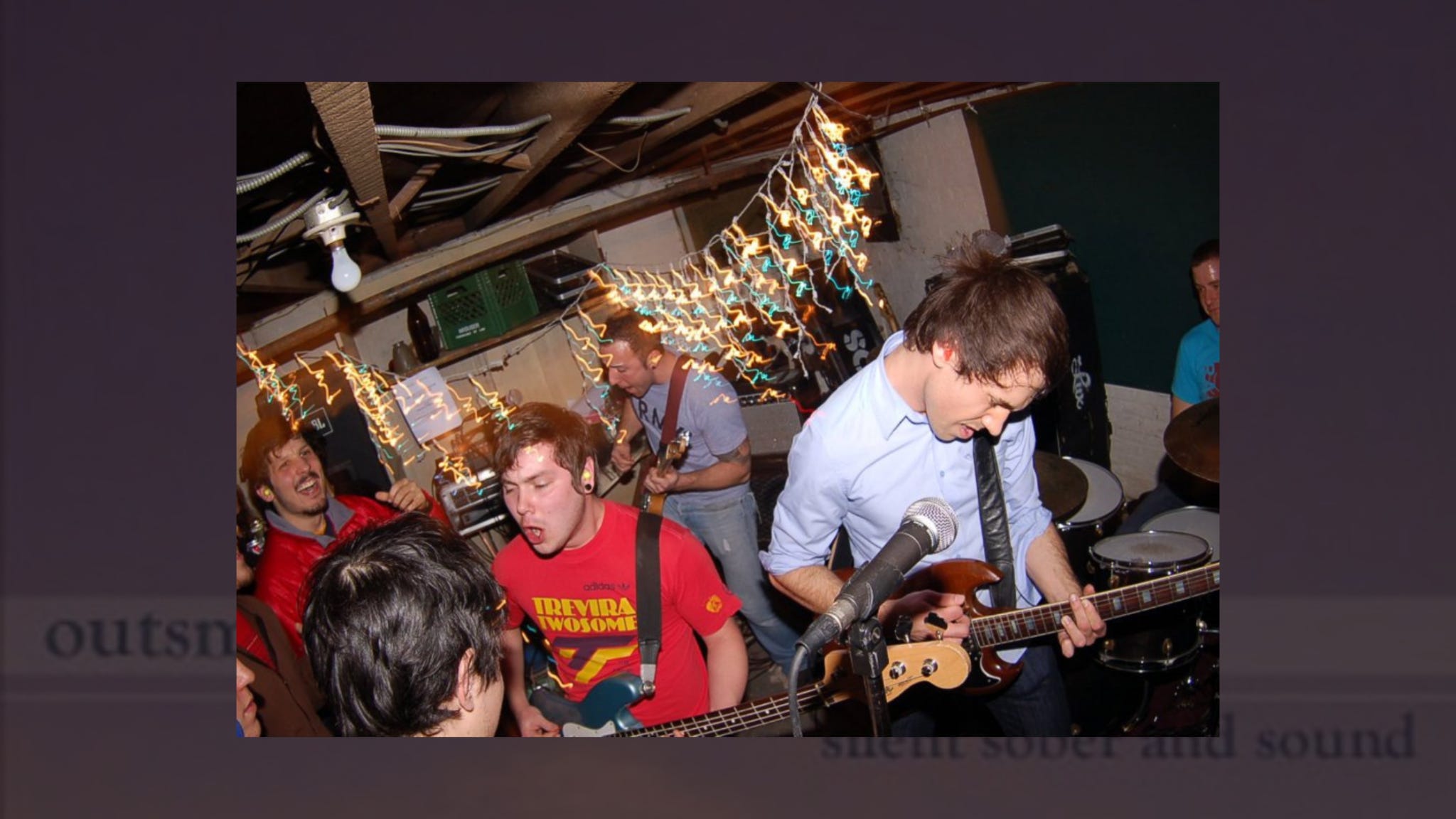
When people tell stories, the big names always come first. They talk about when they saw Thursday, Saves the Day, Lifetime, the Bouncing Souls, Screaming Females, or recent additions to the pantheon Ogbert the Nerd or Gaslight Anthem. These bands outgrew the basements of New Brunswick and put the industrial city back in the collective consciousness of the underground music and community seekers of the NYC area. Beyond the names everyone knows, the New Brunswick scene was thriving thanks to the eclectic mix of bands that accumulated in the Rutgers orbit. Along with bands like Paulson, Penfold, and You and I, Outsmarting Simon were regulars in NB basements and VFWs across the state. I had the absolute pleasure of chatting with PJ Bond about the band’s origins, their music, and the legendary New Brunswick scene.
Who Are Outsmarting Simon
Formed in 2000 at Rutgers, Outsmarting Simon came together the way so many New Brunswick bands did, through dorms, cheap gear, and a willingness to say “yes” before knowing how anything would work. Guitarist/vocalist Greg Roehrich, drummer Brian Maguire, and guitarist Brian Kelly were all engineering students who started writing and recording together. PJ Bond, another student musician with a handful of songs, met Maguire at a party on the Cook campus.
“I asked if he wanted to play drums on some of my stuff,” PJ said. “He said he already had a project, and jokingly asked if I wanted to play bass in it. I was not a bass player, but owned a bass, so I figured it was worth checking out.”
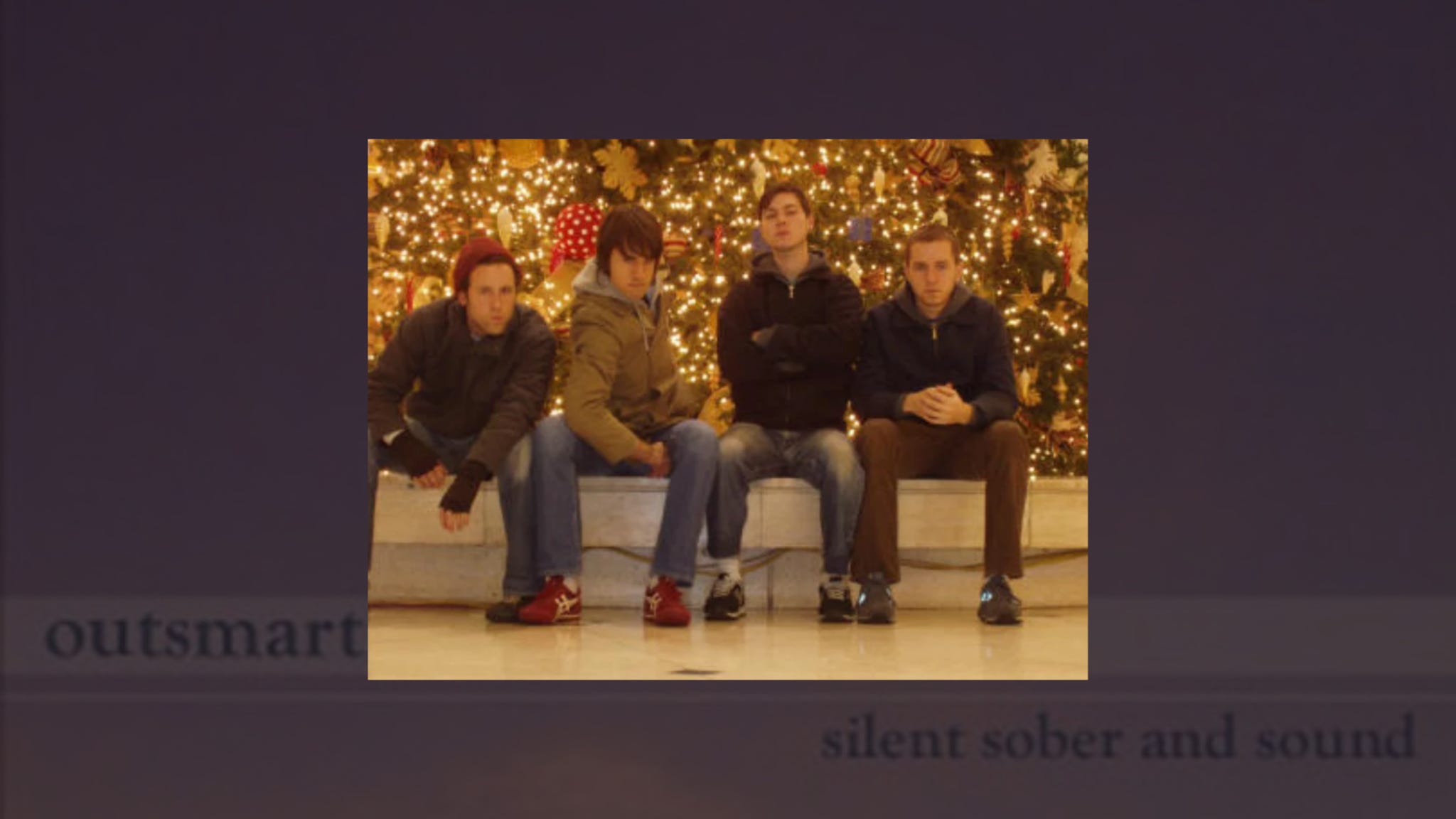
Maguire handed him a demo tape before winter break. PJ went home, devoured the parts, and when the semester started again, he hauled his gear into their practice space. The chemistry clicked. At first, Greg sang all the leads and Kelly handled backups, but as PJ started sneaking in some vocal harmonies, the band’s sound started to shift.
“They suggested I try writing a lead part to ‘Hub City,’ because they weren’t happy with what they’d come up with,” he said. “We all liked how that worked out, so Greg and I ended up splitting the lead parts and adding supporting counterpoint lines to each other’s songs.”
That dual-vocal, counterpoint-heavy approach would become one of Outsmarting Simon’s signatures, setting them slightly apart from many of their peers who leaned more on a single, confessional voice.
Sounds of Simon
Sonically, Outsmarting Simon sat in the lineage of late-’90s and early-2000s emo and indie rock. Their core influences will be familiar to anyone who frequented basement shows in that era, including Penfold, Mineral, The Get Up Kids, Jimmy Eat World, and The Appleseed Cast. You can hear the patient builds and dynamic swells of Jimmy Eat World’s Clarity, the atmospheric guitar work of Appleseed Cast’s Low Level Owl records, and the emotional directness of bands like Mineral all layered into their first full-length, Silent, Sober and Sound.
At the same time, the four members were each pulling from their own corners of the record store. Maguire was a Springsteen kid. Kelly came out of hardcore. Greg had older punk in his DNA. PJ brought a heavy dose of ’90s alternative rock. None of this was so far afield that it made the songs disjointed, but it gave Outsmarting Simon a slightly different flavor than many of the straight-down-the-middle emo bands of the time.
“We definitely did end up emulating some of these bands pretty heavily at times, and don’t pretend we were exceptionally original,” PJ said. “But we did want to try to find our own sound when possible.”
You can hear the diversity of influences all over Silent, Sober and Sound. Chiming, delay-heavy guitars that nod to Appleseed Cast, but with more direct, hooky vocal lines; song structures that stretch out and segue into each other rather than landing in neat, verse-chorus boxes. Lyrically, the early material leans on heartbreak and loss (a staple of the era) but even there, the band was looking to evolve. By second LP Stand Up Straight, the focus shifted to broader interpersonal friction, social pressure, and what it means to try to live a life outside the default.
Silent, Sober and Sound and Stand Up Straight
Part of what quietly distinguished Outsmarting Simon was how they thought about building songs. Three engineers and an English major might not be one’s first choice for an emo band lineup, but it shows up in the right ways.
“Sometimes their analytical brains led us to think about arranging songs in a way we might not have otherwise,” PJ said. Odd time signatures, layered effects, and careful transitions were part of the structural thinking behind the band.
That mindset came to a head with Silent, Sober and Sound. Recorded in a wonderfully patched-together process with their friend Steve Poponi from Up Up Down Down (another NB classic band) at Gradwell House in South Jersey (and on borrowed recording gear back at a house in New Brunswick). “Steve passed a few years ago, sadly, and the world definitely has a hole in it now without him,” PJ said. “Steve was biting and witty, extremely talented, and really funny. He made fun of us a lot, in an older brother sort of way, but he clearly respected us, and when we told him our budget and our needs, he was beyond generous and kind in helping us shape our vision.”
That vision was not exactly straightforward. “It was really a wild experience, and the way we put it together had a high potential for failure,” PJ explained. The record was designed almost like a suite. Greg and Kelly came up with a melodic theme that appears at the beginning, middle, and end. The idea was for those songs to feel like one long piece broken into sections, with recurring motifs and production touches stitching the whole album together.
“We started piecing the record together like a puzzle,” PJ said. They tracked drums with Steve at Gradwell, then took the hard drive home to record guitars, bass, vocals, and extra textures in their New Brunswick house, using whatever mics and amps they could scrounge. When they brought it all back, Steve helped them assemble and mix the album into the cohesive, sprawling album audiences came to love. It’s long, imperfect, and very of its time, but that’s part of its charm. “I don’t think I would change anything,” PJ said. “It’s a really great snapshot of the time.”
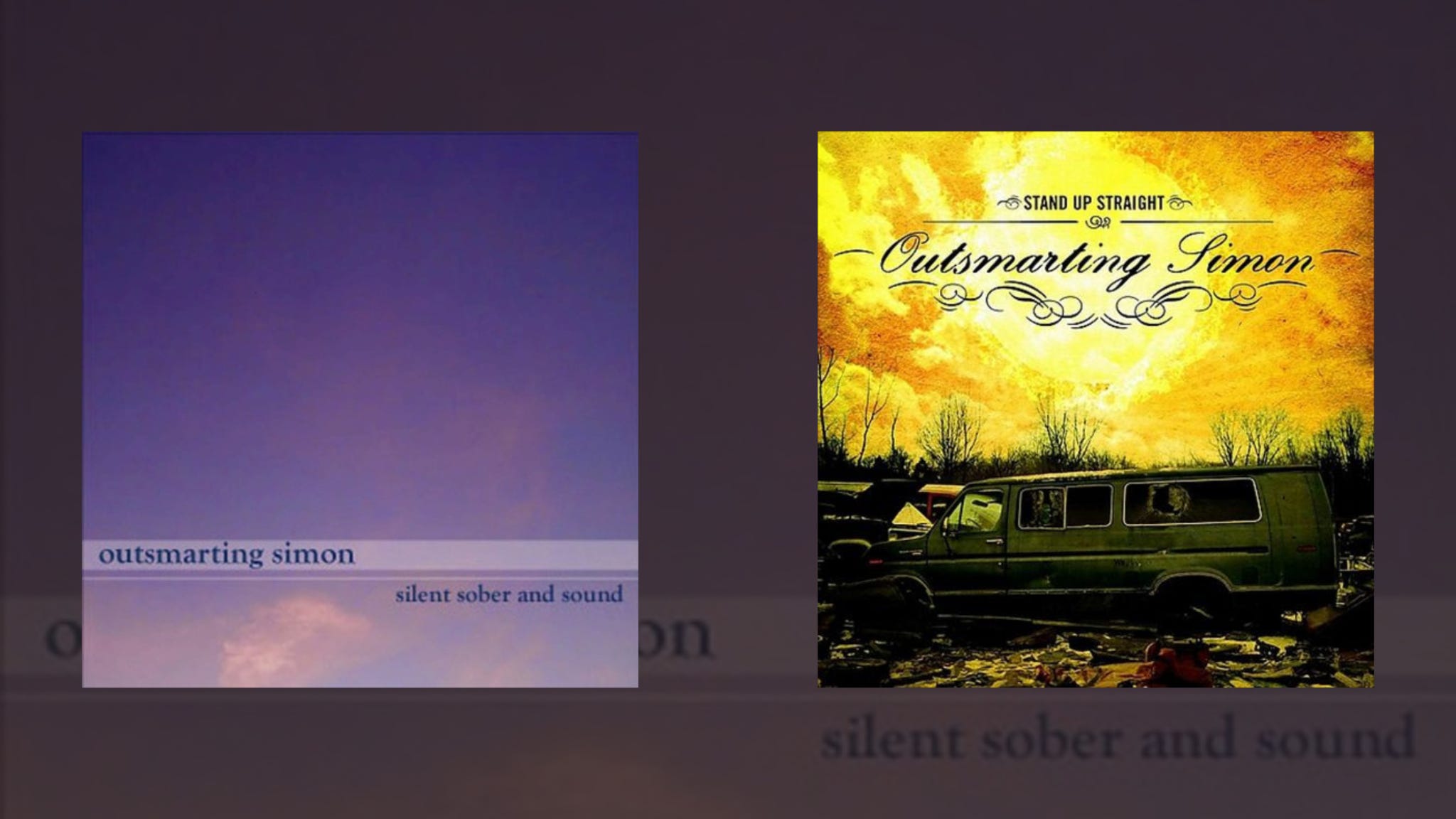
“Stand Up Straight, on the other hand, still bothers me to this day,” PJ said. “I ended up losing my voice while we were recording that record, and there are some production and mixing choices that were made that I really don’t like. Between those two things I wish we could have captured things differently or redone them.”
The band’s second full length finds them tightening their sonic approach. The songs are shorter, more direct, and lean more heavily into the emo and pop-punk side of their DNA, favoring immediacy over expansiveness. “Number Two” and “Cusp of Carabella” hit the familiar Outsmarting Simon sweet spot, earnest and hook-driven with layered guitars and dueling vocals, but the album as a whole feels slightly underdeveloped compared to its predecessor.
“Silent, Sober, and Sound is a really long album,” PJ explained, “and part of that is that inability to cut things.” In contrast, Stand Up Straight feels like a band streamlining their songwriting at the expense of some of the atmosphere and patience that made the earlier record resonate so deeply.
PJ explained:
“I really wanted that record to help propel us to some next level, and hoped it would be the album that got us to a point where we could be a full time band on bigger tours, and I think that tainted how I approached certain parts…In some ways I prefer some of the songs on the second album, but I still take issue with some of the recordings of them. The first record feels much closer to the vision we had, so for that reason I prefer it.”
New Brunswick after the boom
If Thursday represents the height of the New Brunswick wave, Outsmarting Simon existed just after that peak. “We were more on the tail end of things,” PJ said. “We weren’t playing with bands like Thursday or Saves the Day, but we made really good friends with some amazing bands all over New Jersey, and I feel really lucky to have done so.”
Their ecosystem was different but no less meaningful, and along with Penfold (who PJ calls his favorite band), included acts like The Assistant, Paulson, In Pieces, Estella, Denver in Dallas, Ponce de Leon, Up Up Down Down, Scream Hello, Marigold, Breaking Pangaea, We’re All Broken, Alli with an I, and many more.
If the Bouncing Souls and Lifetime represented an earlier generation of NJ punk, and Gaslight Anthem would soon carry New Brunswick torch into the late 2000s, Outsmarting Simon occupied the early-2000s emo/indie pocket in between, sharing cramped basements with touring bands from all over the country.
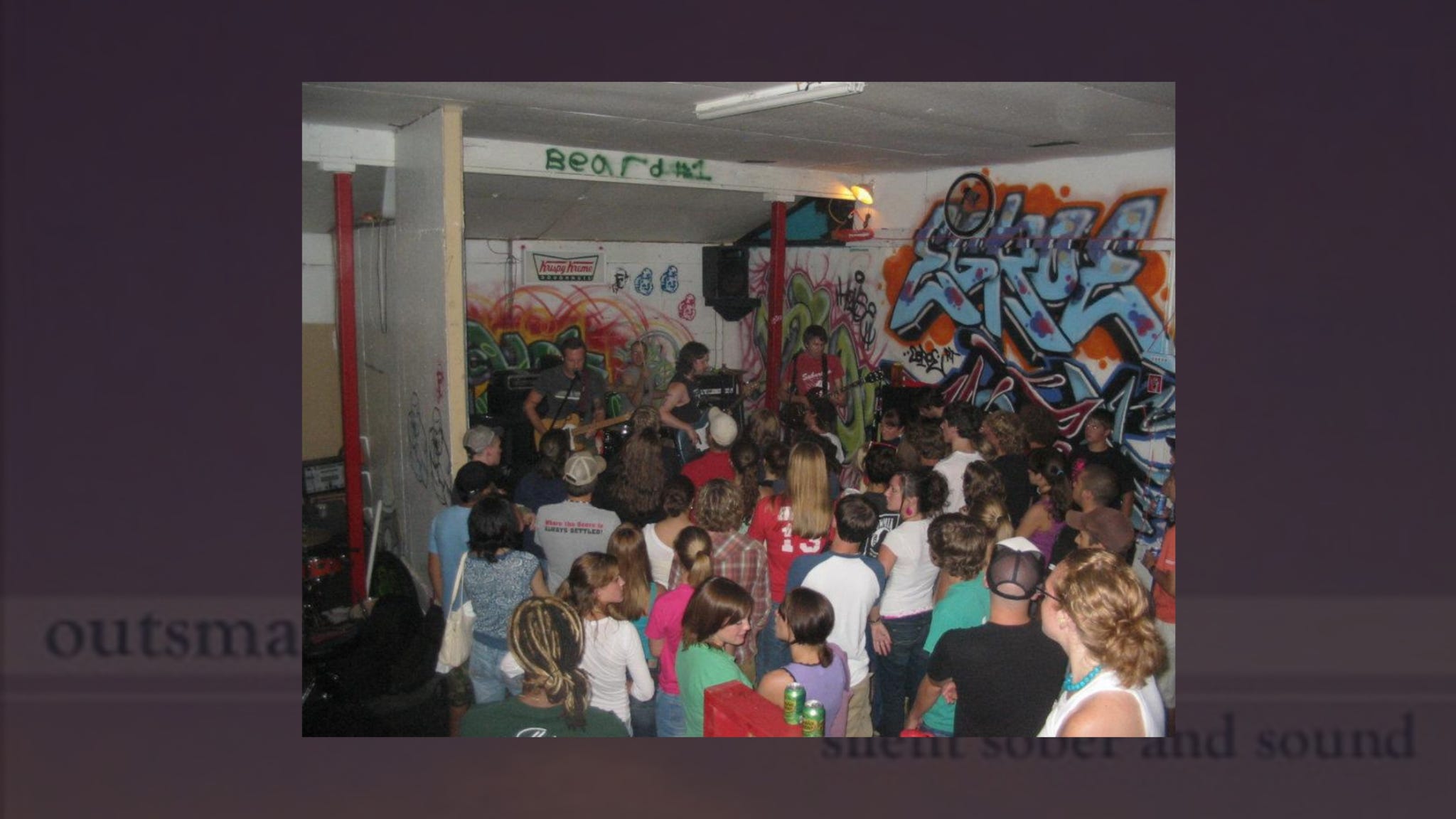
Edit: an earlier version of this post labeled the photo as a New Brunswick basement, PJ clarified it was in North Carolina!
What really made the scene special, PJ explained, wasn’t any one band or show, but the totality of the experience. Cooking for touring bands, sleeping on floors, sharing book trades and zines, starting a small label and distro, and constantly being in and out of each other’s homes all contributed. It was community in the most literal sense.
“I definitely remember feeling that the community we were part of had a strong sense of connection that I did not feel like I saw in other peoples’ groups,” PJ said. Years later, touring with other bands, he realized how rare that intimacy had been. Friends from different scenes would listen to his stories like he was describing a different universe.
Crickets and 100 plates at CiCi’s
Like most good DIY bands, Outsmarting Simon’s history is stitched together from half-chaotic tour memories and tiny victories, like a packed back room behind a pizza shop in Mount Pleasant, South Carolina, that felt like it might literally collapse from kids hanging off rafters, or in upstate New York basements where they were welcomed like locals. Even the festival sets at Skate and Surf or Bamboozle that looked good on paper, even if they weren’t the shows that changed their lives, all contributed to the positive experience with the band.
Some memories are almost slapstick. On tour with Scream Hello, Phil from that band once released a hundred crickets in Outsmarting Simon’s van. “Most of them died overnight, but you could still hear the occasional chirping for a few days,” PJ remembered. The prank came after a night when both bands tried to eat 100 plates of food at a CiCi’s Pizza buffet (“The manager really didn’t like it”). On another tour with Alli with an I, they bought a BB gun and took turns shooting each other at increasingly close range. “We were idiots, and it was fun.”
Other memories, not as much. A tour with Paulson, who quickly became some of PJ’s favorite people and favorite local band, remains a highlight, even though he nearly broke himself trying to jump off of one shed to another in Myrtle Beach, smashing his wrist and throat. “I actually think it has affected me to this day. I don’t think I can sing nearly as high as I could before that stupid accident,” he said.
Live, the band thrived in close quarters. “We loved small shows with big energy, and never really felt hugely comfortable on big stages,” PJ admitted. The goal was always the same, to make the room feel like it might explode, then go outside and talk to people afterward and feel that shared charge in the air. Outsmarting Simon was never big enough that fans felt faceless, PJ recalled. He mentioned that they made actual friends in upstate New York, the Carolinas, and Florida, adding “it was a really nice feeling to go to cities in other states and feel like we had a bunch of buddies.”
Too late and a little too early
There was no dramatic breakup moment for Outsmarting Simon, no farewell show with a sold-out hometown crowd. Life just pulled the members in different directions. Work and grad school opportunities came up. The band wasn’t gaining enough traction to justify going all-in forever. PJ wasn’t ready to stop, so he joined Marigold and later started making solo records, eventually touring across the U.S., Canada, Europe, and Australia. Moves to Philly and then North Carolina made Outsmarting Simon rehearsals even less practical. The others kept playing together for a bit, but nothing stuck as a full-time project.
In hindsight, PJ has a pretty clear-eyed view of where Outsmarting Simon sat in the emo timeline.
“It felt kind of like Outsmarting Simon was both way too late and a little too early to have benefitted from a thriving scene,” he says. “What we had was amazing, but I do feel like we were at the tail end of one boom, and a few years before the next.”
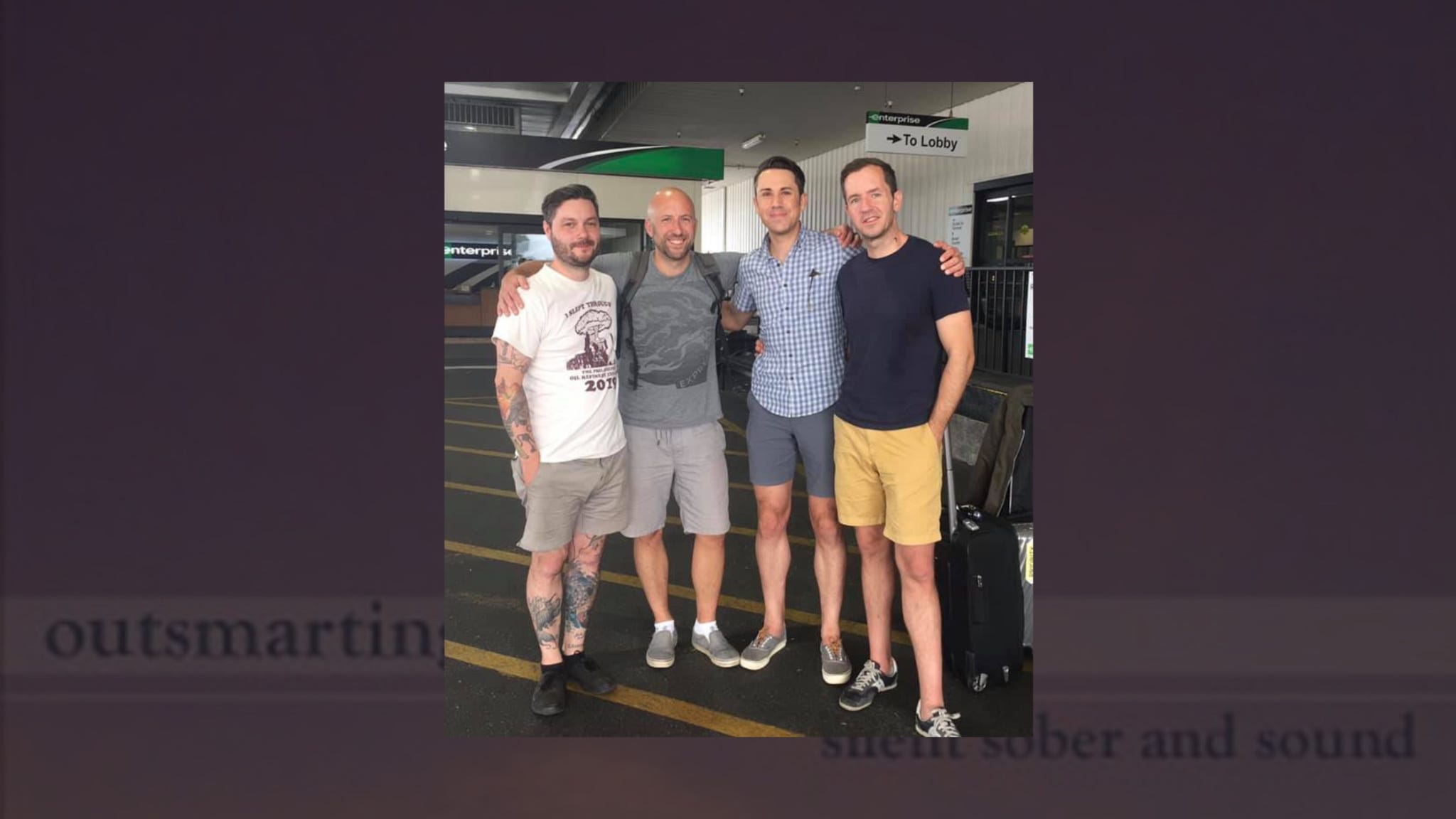
They never got the big reunion offers that pulled Penfold back for festivals and overseas tours. They’ve talked loosely about practicing again, maybe playing if the right show came along, but with PJ now living ten hours south, it’s more fantasy than plan. Still, when he came back to New Jersey recently to play a show with Penfold, all three of his former bandmates came out. The connection hasn’t gone anywhere.
What remains
For PJ, writing “Drive by Monologue” from Silent, Sober and Sound remains one of the most cherished memories. Greg wrote the main verse and chorus, Kelly filling in connective tissue, and the four of them building the climactic ending together while PJ thought about the middle section of the Beatles’ “A Day in the Life.”
Kelly and Greg’s delay-heavy guitars and Maguire’s drum part became “one of the most iconic parts of anything we did.” Live, it was a go-to set closer or second-to-last song, a way to push that small-room energy right to the edge.
For listeners just now stumbling onto Outsmarting Simon through Bandcamp uploads or emo subreddit recommendations, PJ doesn’t have any expectations about the band’s legacy.
“I don’t know that they need to take anything away from it, other than that I hope it brings them joy or comfort or inspiration, in the same way that we found those things in the bands we loved,” he said. “Probably more so than any other time in my life, the early days of that band were the most pure and exciting times in music and who I was becoming.”
If anything, that might be the most New Brunswick thing about Outsmarting Simon. They’re a reminder of how much of that world was built on small, fiercely felt experiences. “Outsmarting Simon was built on a foundation of community and commonality, so we often felt fairly close with the people who supported us,” PJ explained. And while they might not be the first band you think of when you talk about New Jersey emo, Outsmarting Simon is without a doubt an example of why that time and place still feels so special to the people who were there and even those who weren’t.
A Message from Mr. Bond
After playing music and touring in bands for the better part of a decade, I decided to shift my energy to some solo songs I’d been working on. With the help of my brother, Brian Bond, and our great friend Keith Carne on drums, I recorded a mix of full band and solo songs and then took them on the road between 2009 and 2014. We recorded a couple of full lengths and a few EPs, and I had the amazing luck and distinct pleasure of touring all over the US, Canada, Europe, and Australia.
I made a ton of wonderful friends, played some incredible shows, and eventually got pretty burnt out. After a long, long break, I started writing music again in 2020, and eventually started recording again, in a much more relaxed fashion. Now Brian, Keith, and I have enough songs put together that we are preparing to put out a record at some point in the near future. We are still figuring out the details, but please follow me on Instagram at @pjbondmusic, for news and performances. Thank you so much for checking it out.
Author’s note: shoutout to the Outsmarting Simon Facebook page and this Alternative Press story on New Brunswick by Amy Rowe